
A vendor sends a security advisory. Who checks it?
A trusted supplier can still ship an affected product. Arrange the handoff between purchasing, IT and the application owner before an advisory arrives.
Locate the installation and the decision maker

 A vendor sends a security advisory. Who checks it?
CISA’s response to the SolarWinds Orion compromise illustrates why the vendor name on an invoice is insufficient. A managed service, a retired server and an actively used installation require different follow-up. Keep the product, version, location and operator together in the inventory.
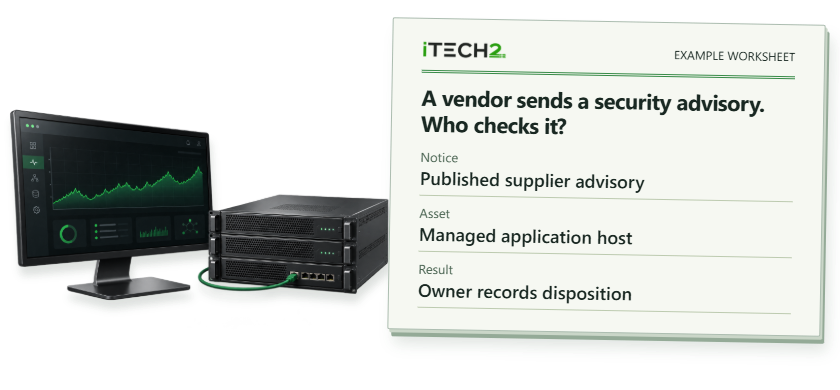
- Notice
- Published supplier advisory
- Asset
- Managed application host
- Result
- Owner records disposition
Verify the advisory through a known channel
Use the supplier’s published support channel to confirm the notice. Ask the application owner to compare the affected product range with the local inventory. If another provider operates the system, request their dated assessment and an escalation contact.
Keep a record that the next shift can use
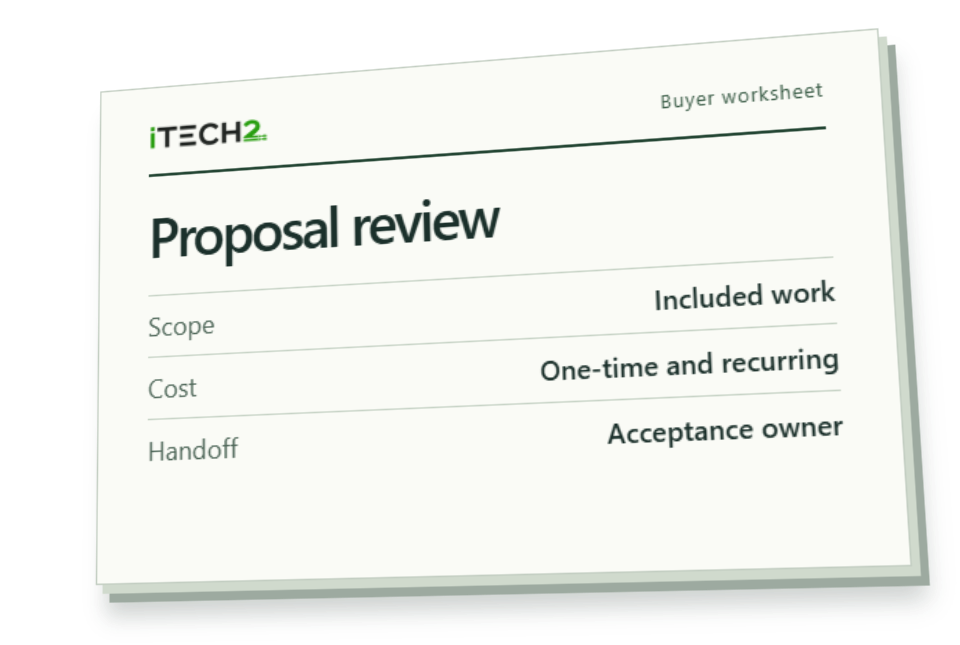
Record which installations were checked, which remain unknown and when the owner will update the decision. For a business-critical change, agree on user acceptance and a return-to-service decision before booking the window.
Sources
Follow an alert to its owner
A reported message reaches the security team. A named reviewer records the decision and follow-up.
Further reading
Common questions
Who should receive a security finding?
Give each finding to someone who can authorize a change. Record the affected system, business impact, due date and evidence needed for closure.
Incident response planning