
Security monitoring and orchestration
Start with a question that logs must answer. Agree which identity, email and firewall records capture the event, how long to retain them and who reviews the alert.

Interactive workplace
Two records. One incident.
Commercial businesses
Security monitoring and orchestration
Trace a training notification from a source system into the monitoring queue. Check whether it retains the user, asset, timestamp and responsible team. Identify steps that can be automated and the decisions that need explicit human approval.
Related services and reading
A typical project decision
A sign-in alert may require identity logs and endpoint records to explain what happened. Document the source, time zone and retention period for each.
What to bring
Bring a list of log sources and retention requirements.
How to check the result
An analyst can find both records for a known event, tie them to the same user or device and record the outcome.
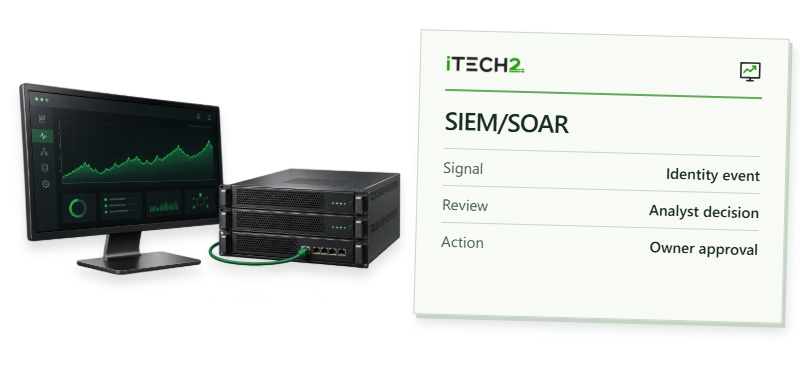
Decide which alert can enter an automated workflow
Trace a training notification from a source system into the monitoring queue. Check whether it retains the user, asset, timestamp and responsible team. Identify steps that can be automated and the decisions that need explicit human approval.
Document the required log fields, escalation route and evidence that the response workflow completed.
Follow an alert to its owner
A reported message reaches the security team. A named reviewer records the decision and follow-up.
When may an alert trigger an automated action?
Trace a sample identity alert from its log source to the on-call owner. Separate notification from actions that interrupt work. Record which response requires approval, how it can be reversed and how an analyst verifies the outcome.
Prepare a working brief
Decide which alert can enter an automated workflow. Use the editable worksheet to name the owner, collect the evidence and record what will count as a completed handoff.
Download the security monitoring and orchestration worksheet (TXT) · Compare assessment optionsFurther reading
Browse 10 related articles
- A vendor sends a security advisory. Who checks it?
- A practical acceptance test for a Copilot pilot
- What to check before buying Microsoft 365 E7
- Which dependency could delay your cloud cutover?
- Build a project decision log that survives handover
- Two breach reviews to bring to your next IT meeting
- Should the next server refresh move to Azure?
- From a Copilot readiness report to a pilot list
- What to measure before sizing an Azure migration
- What to ask a supplier about post-quantum migration
Common questions
Who should receive a security finding?
Give each finding to someone who can authorize a change. Record the affected system, business impact, due date and evidence needed for closure.
Incident response planningWhat should the security monitoring and orchestration handoff include?
Document the required log fields, escalation route and evidence that the response workflow completed.
See the worked example